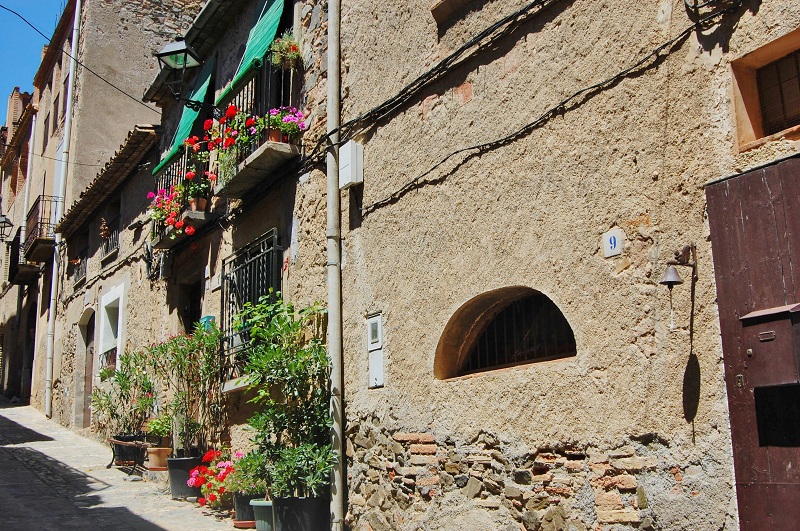
👁 Village
Bellmunt del Priorat
📍 Bellmunt del Priorat
A DOQ Priorat village with a strong mining character, tied to its lead mines and their museum.
👁 Sights
The Priorat is far more than vineyards: thousand-year-old monasteries, villages clinging to the rock, Saracen castles and a mountain range — the Montsant — that watches over the whole region.
From the Escaladei charterhouse to the village of Siurana, these are the places that explain the Priorat’s landscape and history. Filter by municipality or type and find them on the map.
📍 Bellmunt del Priorat
A DOQ Priorat village with a strong mining character, tied to its lead mines and their museum.
📍 Bellmunt del Priorat
A museum at the Priorat's most important lead-mine complex, with a guided descent through 19th-century galleries.
📍 Cabacés
A village in the north-west Priorat, land of olive oil (DOP Siurana) and wine (DO Montsant), with a Gothic church housing an old retable and a medieval bridge, bordering the Montsant Natural Park.
📍 Cabacés
Remains of the castle that was head of the episcopal Barony of Cabassers under the bishops of Tortosa.
📍 Cabacés
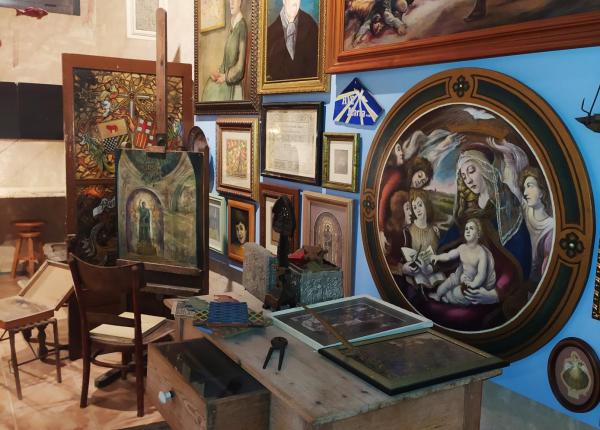
A municipal museum in Cabassers devoted to the work of painter Miquel Montagud, in the El Greco tradition.
📍 Capçanes
A DO Montsant village known for the international prestige of its cooperative winery, the Celler de Capçanes.
📍 Cornudella de Montsant
A 1919-1922 cooperative winery by Cèsar Martinell, a "wine cathedral" still producing with much of its original installation.
📍 Cornudella de Montsant
A gateway town to the Montsant Natural Park and to Siurana, with a modernist cooperative winery and its old town.
📍 Cornudella de Montsant
A reservoir on the Siurana river ringed by the Montsant and Prades ranges, with the village of Siurana perched above.
📍 el Lloar
One of the smallest and most authentic Priorat villages (with around 99 inhabitants), surrounded by DOQ Priorat vineyards and with viewpoints over the landscape.
📍 el Masroig
A centenary wine cooperative (founded in 1917) with a Noucentista façade, the hub of DO Montsant wine and oil in el Masroig, with a farm shop and wine-tourism visits.
📍 el Masroig
A village in the south-west Priorat by the Siurana river, within DO Montsant, with the Pinyeres sanctuary and the Puig Roig settlement.
📍 el Molar
A village on the western edge of the Priorat with a notable Iberian site at Mont Calvari and a strong lead-mining past.
📍 els Guiamets
A DO Montsant village in the south of the comarca, with the Guiamets reservoir as its natural landmark.
📍 Falset
A restored castle on a hilltop over Falset, today home to the Priorat Regional Museum and the "Castell del Vi" wine interpretation space.
📍 Falset
A 1919 cooperative winery by Cèsar Martinell, a disciple of Gaudí, one of the "wine cathedrals" listed as a National Cultural Interest site.
📍 Falset
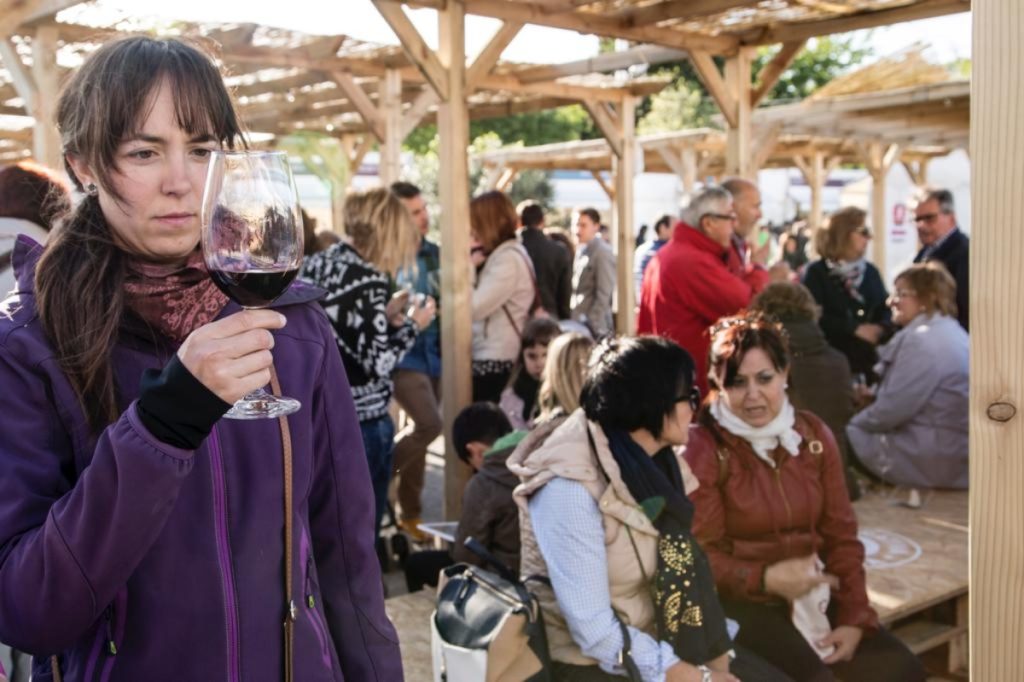
The Priorat's flagship wine fair, with a tasting of DOQ Priorat and DO Montsant wines at Falset's fairground, on the first weekend of May.
📍 Falset
The medieval core of the Priorat's capital, a short walk climbing from the arcaded square up to the castle.
📍 Falset
A Mediterranean mountain agricultural cultural landscape —vines, olives, almonds, dry-stone walls and slate soils— candidate for UNESCO World Heritage.
📍 Gratallops
A hilltop hermitage amid vineyards with the finest views over Gratallops and the DOQ Priorat landscape.
📍 Gratallops
A small village that is the epicentre of the modern DOQ Priorat revival, with some twenty world-renowned wineries.
📍 la Bisbal de Falset
An olive-growing village set on a rock in the Montsant river valley, facing the Natural Park, with the Santa Llúcia cave-hermitage.
📍 la Figuera
A hilltop village known as the "sentinel of the Priorat", with panoramic viewpoints and memory of the Battle of the Ebro.
📍 la Morera de Montsant
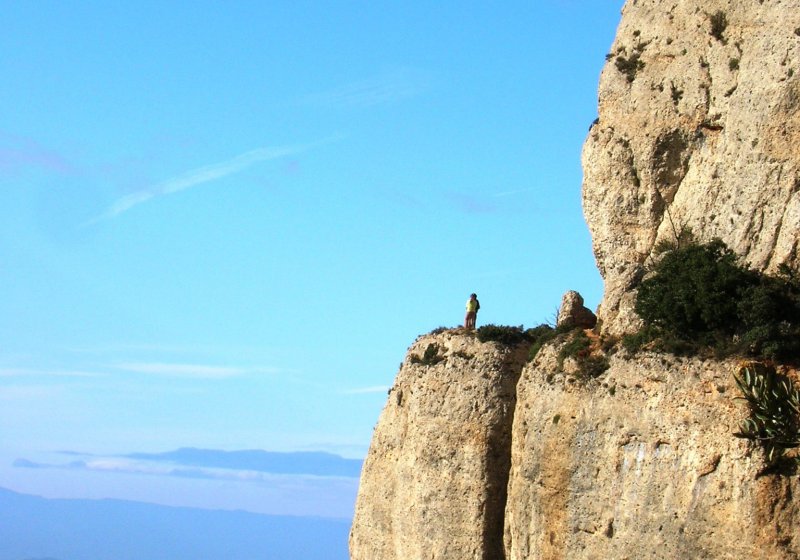
A natural balcony on the southern edge of Montsant overlooking the heart of the historic Priorat, a highlight of the graus hike.
📍 la Morera de Montsant
A classic hike up to the Montsant plateau via the historic "graus" from la Morera, linking with the GR-171 and GR-174.
📍 la Morera de Montsant
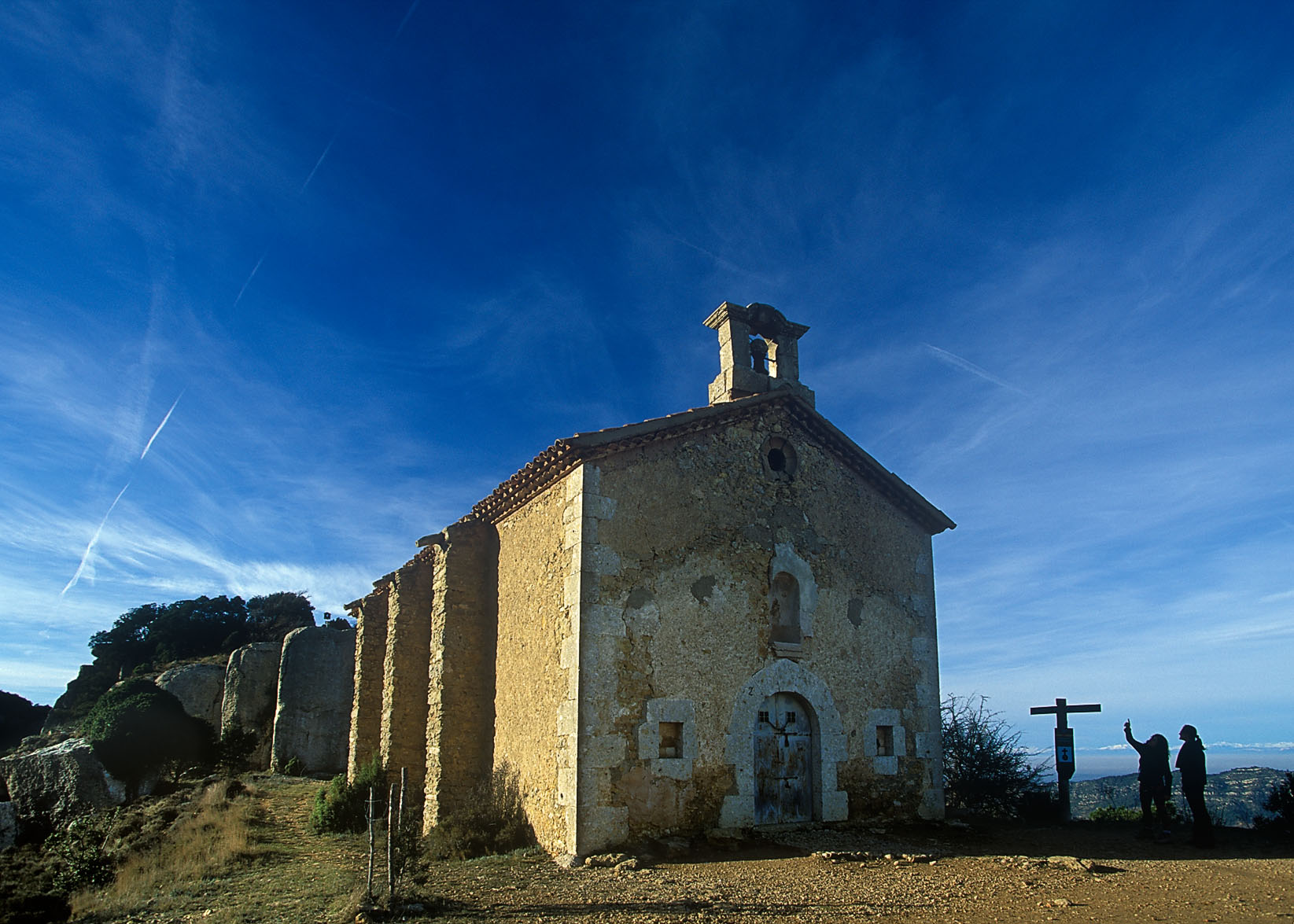
The highest chapel on the massif (1,027 m), at the foot of Roca Corbatera, rooted in Montsant's medieval eremitism and shaped by centuries of land grants, monastic communities and rebuilding.
📍 la Morera de Montsant
A village at the foot of the Montsant Cingle Major, home to the park visitor centre and starting point for climbs to the massif.
📍 la Morera de Montsant
A natural park declared in 2002 protecting 11,756 ha of the Serra de Montsant, with the Cingle Major escarpment, hermitages, and hiking and climbing trails; a Starlight destination since 2021.
📍 la Morera de Montsant
At 1,163 m it is the highest point of the Serra de Montsant and of the whole Priorat, with views reaching the Pyrenees on clear days.
📍 la Torre de Fontaubella
One of the smallest villages in the comarca, in the eastern Priorat below the Mola de Colldejou, within DO Montsant.
📍 la Vilella Alta
One of the most authentic, untouched villages of the Priorat, on a hill by the Escaladei stream and ringed by Montsant.
📍 la Vilella Baixa
A village known as the "New York of the Priorat" for its seven- and eight-storey houses clinging to the bank of the Montsant river.
📍 la Vilella Baixa
A Romanesque stone bridge over the Montsant river, the best spot to photograph the "skyscraper" houses of la Vilella Baixa.
📍 Marçà
A village in the southern Priorat, minutes from Falset, within DO Montsant, with the karstic hill of la Miloquera.
📍 Margalef
A small hermitage sheltered beneath a huge rock overhang, a base for hikes through Montsant's rock formations.
📍 Margalef
A small village in the Montsant river valley, world-famous for sport climbing, with a reservoir and wineries.
📍 Margalef
A reservoir on the Montsant river below the conglomerate cliffs, with a leisure area and an easy riverside walk.
📍 Margalef
One of the world's premier sport-climbing destinations, with over 1,400 routes on the Margalef conglomerate cliffs.
📍 Poboleda
A DOQ Priorat wine village by the Siurana river, a base for hikes into the Serra de Montsant Natural Park.
📍 Porrera
One of the most respected wine villages of DOQ Priorat, famous for its sundial route and rich dry-stone heritage.
📍 Pradell de la Teixeta
An eastern-Priorat mountain village on the GR-174, amid vines, hazelnut and olive trees of DO Montsant.
📍 Scala Dei
The first Carthusian monastery on the Iberian Peninsula, founded in 1194, which gave the Priorat its name and started its winemaking.
📍 Scala Dei
A tiny hamlet born of the monastery's farm estate, regarded as the cradle of Priorat wine and a gateway to Montsant.
📍 Siurana
A clifftop fortress that was the final Muslim stronghold of Nova Catalunya, taken in 1153-1154.
📍 Siurana
A tiny medieval village perched on a cliff between Montsant and the Prades mountains, the last Moorish stronghold in Catalonia and a climbing mecca.
📍 Torroja del Priorat
Torroja's Baroque church, known for its 1799 organ built by Jean-Pierre Cavaillé, one of Catalonia's historic organs.
📍 Torroja del Priorat
A small village in the Siurana valley, home to the DOQ Priorat regulatory council, with streets paved in river pebbles.
📍 Ulldemolins
A spectacular gorge the Montsant river carves between the Serra la Llena and the massif, with the Cadolles Fondes pools.
📍 Ulldemolins
A hermitage of medieval origin on the north slope of Montsant, the main starting point for the hermitage and gorge routes.
📍 Ulldemolins
A small 13th-century Romanesque hermitage by the river, deep in the Fraguerau gorge, tied to the hermit Fra Guerau, who obtained possession of the valley in 1192.
📍 Ulldemolins
A late-16th-century Renaissance church by Jaume Amigó and Pere Blai, regarded as one of the finest in Catalonia.
📍 Ulldemolins
An 18th-century Baroque sanctuary in the upper part of Ulldemolins, built over a 16th-century chapel and protected as a local cultural interest site.
📍 Ulldemolins
A village at the north-west edge of the Priorat, within the Montsant Natural Park and gateway to the Fraguerau gorge and its hermitages.
No results with these filters.