👁 Museum
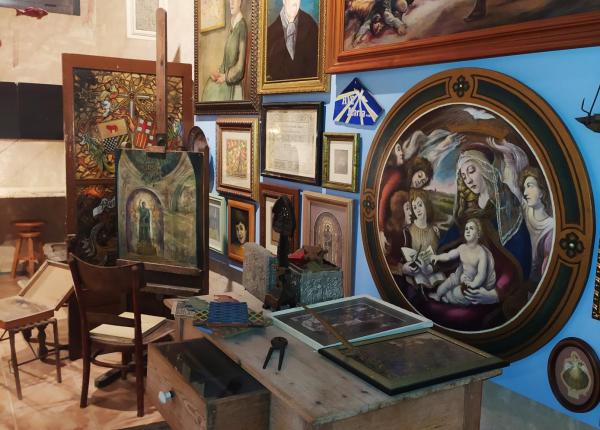
Museu Miquel Montagud
📍 Cabacés
A municipal museum in Cabassers devoted to the work of painter Miquel Montagud, in the El Greco tradition.

Cabassers (officially adopted name since 2024; also spelled Cabacés) stands on a hill in the north-west Priorat, at 358 m altitude, crossed by the Montsant river and bordering the Natural Park. It has around 296 inhabitants (2025) over a municipal area of 31.3 km². Its economy rests on olive oil (DOP Oli Siurana) and DO Montsant wine, with an Olive Oil Fair held every December.
It keeps the parish church of la Nativitat de la Mare de Déu — Gothic-Renaissance in style, built in the 17th century with its facade rebuilt in 1823 — which houses a retable attributed to Lluís Borrassà (around 1400), the church of Sant Joan Baptista, the Miquel Montagud Museum of Cabassers (dedicated to the local painter, 1897-1984), and the hermitages of Sant Roc and Mare de Déu de la Foia. The medieval Pont Vell bridge crosses the Montsant river. Of the castle, once head of the district, no visible remains survive: a school was built on its site in 1933 reusing its stones.
Historically it was the head of the episcopal Barony of Cabassers under the bishops of Tortosa, tracing back to the charter of settlement granted in 1185.
Sources: ca.wikipedia.org · cabaces.org · es.wikipedia.org
Photo: Wikimedia Commons · CC BY-SA 4.0
📍 Cabacés
A municipal museum in Cabassers devoted to the work of painter Miquel Montagud, in the El Greco tradition.
📍 Cabacés
Remains of the castle that was head of the episcopal Barony of Cabassers under the bishops of Tortosa.
📍 Cabacés
A family winery in Cabacés (DO Montsant) founded in 1999 by a farming family established in the area since the 1930s, combining traditional and modern grape varieties and offering wine tourism with donkey walks.
📍 Cabacés
A cooperative founded in 1933 in Cabacés, known today mainly for its extra virgin olive oil, though registered as a grape grower within DO Montsant.
📍 Cabacés
Whole-house rural rental in Cabacés, in the north-west of Priorat, accommodating up to 8 people; suited to families or small groups seeking quiet.