A visit to the Burgos-Porta winery in Poboleda
This article is part of the archive and dates from 2011.
In this blog article I will recount my visit to the Burgos-Porta winery, located on the outskirts of the village of Poboleda.
One of the things I most enjoy about creating this page devoted to the producers of the Priorat is that I often get the chance to visit the people of the Priorat who make the products that later appear on the site. This is the case with the Burgos-Porta winery.
The day I was finally able to visit them was Saturday 19 February. It had rained a little, enough to wet the streets and paths and to turn the dirt track connecting the village with Mas Sinen, the winery’s home, into quite a driving experience. I must say, though, that it was very easy to reach the farmhouse, mainly thanks to the co-piloting of Conxita, co-owner of the winery, and to the signs everywhere pointing the way to the farmhouse.
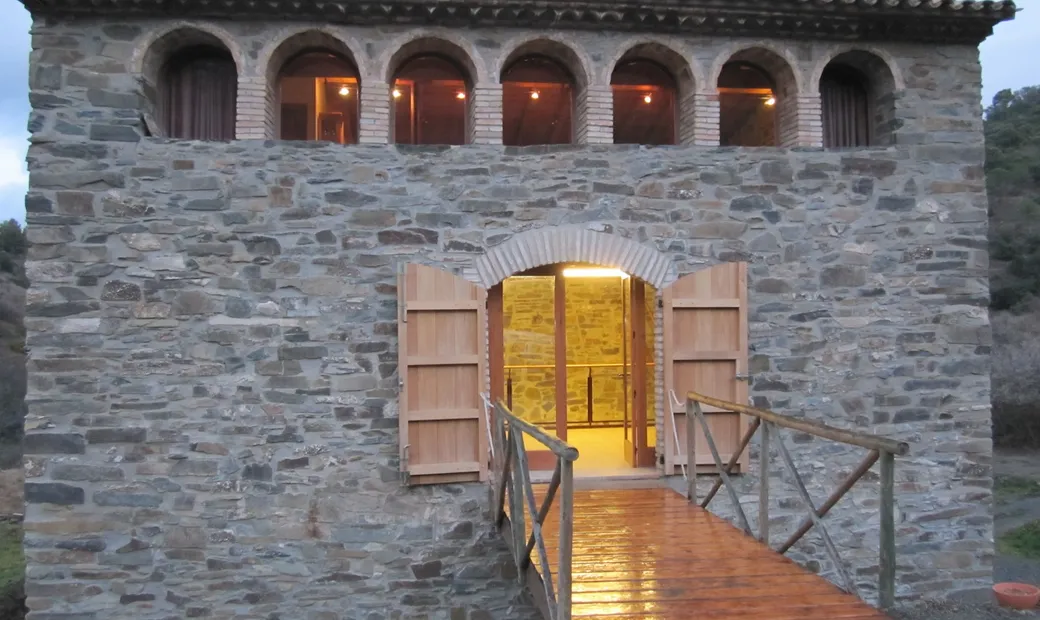
Once we arrived at the farmhouse I met Salvador, also an owner of the winery project. Conxita and Salvador told me a little about where the Burgos-Porta project came from and how they carried it out at Mas Sinen, at whose entrance we stood while we talked.
The Mas Sinen farmhouse (the word «masia» is what a typical country house is called in Catalan) consists of a single building clad in slate stone —typical of the DOQ Priorat— with three usable floors today. On the ground floor are the aluminium vats used to make the wine; on the first floor is the entrance to the house through the car park; and on the second floor, the tasting room, with lovely views over the vineyards and the surroundings of the farmhouse.
Apart from the original farmhouse, which they only remodelled to adapt it to the work of a modern winery, Conxita and Salvador had an underground cellar built to keep the bottles and barrels of wine at a controlled temperature at all times, so that the wine could age properly and thus achieve wines of great quality. They built the underground cellar right next to the farmhouse, under more than a metre of earth and with a vaulted ceiling.
After the visit to the underground cellar, Salvador showed me the area of the aluminium vats where the winemaking process begins. He told me that their wine is organically produced, since they use no fertilisers or other chemical components on the plants; that is why their bottles carry the organic-wine label. Finally we went to the tasting area, where I talked at length with Conxita while Salvador attended to the visitors who arrive at the winery without pause, drawn by the quality of its wines. Those are precisely the wines I was able to try at the tasting we held, and which I liked very much.
With a good taste in my mouth and as the day drew to a close, I said my goodbyes and drove back towards the village of Poboleda, and from there to my starting point.
Many thanks, Conxita and Salvador, for the visit — and welcome to dopriorat.com!